Cleaning Out the Fridge

Today marks the 496th anniversary of Martin Luther’s bold act of nailing 95 Theses to the door of Castle Church at Wittenberg, providing the public kickoff for the Protestant Reformation. (Some historians would argue, I believe rightly, that the reformation was already brewing but Luther’s act gave the movement a public voice and a tangible jolt.)  For Reformation Day, I thought I’d reflect a little here. 

I once read an interesting simile for the Protestant Reformation.  I wish I knew to whom to attribute it.  It goes something like this: 

Reformation movements are like cleaning out the refrigerator. There are two ways of doing it. You can throw out everything that is rotten, spoiled, or out of date, leaving only the good stuff. Or you can empty the whole thing, wash it down, and put back only what belongs. Luther did the former, Calvin the latter. 

What died in here? 

I’m not going to argue the veracity of the last statement, but I think the image is cool.  As the pastor of a church that is struggling to grow and looking for direction, I wonder which reformation path I should take in the coming year. Do I help the church let go of what’s not working?  Or do we strip it down to the bare essentials and only put back what does work? How radical do we want to get? 

Because there’s a truth that churches don’t want to deal with.  They don’t want to hear it, see it, face it, or think about it. That truth: change is inevitable. There is no such thing as standing still. There is only progressing and regressing. If you attempt to stand still you will regress because time marches on right past you. Change can be forced, it can be navigated, it can be coped with, or we can live in denial of it. But it’s a reality we have to deal with, and the choice is ours. Do we embrace it or do we stick our fingers in our ears and go, “LALALALALALALALA!”

Through the scriptures, we are constantly told that God is “doing a new thing” and “making all things new.” God is portrayed as taking what is dead and motionless, and giving it new life, setting it back in motion. God is never portrayed as a museum curator, propping up what is dead and displaying it as though it is alive. Therefore, we have miniature reformation movements in our own lives, in our own churches, in our own communities. Every fridge needs cleaned out on a fairly regular basis! 

Where have you seen reformation at work in your own church? Feel free to respond and discuss! 

The Preacher as Songwriter: Like a Rolling Stone

For years, I’ve pondered writing a book about the link between preaching and songwriting.  I’ve never gotten around to hammering out the time to begin the hard work of organizing my thoughts, writing drafts of chapters, and getting it done.  But the idea still haunts me. 

See, I believe preachers have a lot to learn from songwriters, beginning with the profound insight that all your songs shouldn’t sound the same.  In fact, they shouldn’t all come from the same place.  

Some songs are sung in the confessional or at the altar of shame.  “I didn’t mean to hurt you.  I’m sorry that I made you cry.  I didn’t want to hurt you.  I’m just a jealous guy.” – John Lennon

Some songs are blues.  Some are funny.  Some are happy.  Some proclaim triumph in the life of the singer.  Some protest social conditions.  Deep love, heartbreak, betrayal, reconciliation, sweetness, anger, irony, longing, passion, desire, and shame are the playground of the lyrical wordsmith.  Some tell stories of real-life characters.  Some tell stories that are allegories for part of the human condition.  Some are brags and boasts.  Some songs are stream-of-consciousness absurdity.  Some exist only to entertain.  

And sermons should work in the same ways.  In fact, it’s the variety of an artist’s work that makes us feel like we know that artist better.  A clearer picture of Elvis Costello emerges when you mix the achy tenderness of Alison with the jaded anger of a heartbroken idealist (What’s So Funny); when you place his whimsical tale of marriage and divorce (Everyday I Write the Book) alongside the darker Indoor Fireworks, and hold them up against the very real love song She.  

But let’s take a look at perhaps the most iconic song in rock and roll: Like a Rolling Stone by Bob Dylan

It’s considered iconic because it broke all the rules.  It was a 6 minute single at a time when singles had to be under 3:30.  It was an electric song by a primarily acoustic artist, at a time when Dylan’s audience considered his break with the orthodoxy of folk music a betrayal.  It wasn’t a love song or a typical break-up song, or an entertaining piece of zip-a-dee-doo-dah.  The character to whom Dylan is singing isn’t just a character – he or she is a target, the recipient of his anger and vitriol.  It was filled with real emotion, real pain.  You can hear the hurt, anger, shock, bitterness, desperation, and desire for revenge in his repeated yowls of “how does it FEEL?”  The wound is fresh, the emotion is raw, the tears are salty.  He sounds like he wants to scream.  Or cry.  Or both.  

Other songwriters heard it and realized that the game had changed.  Nothing was off limits anymore.  Time limitations? Gone.  Bowing to the expectations of your primary audience?  Exploded.  Veiling emotion with a layer of metaphor?  NO!  

And why is it considered so iconic? So important in the history of rock?  Because it connected with people. They could relate to it. Dylan was giving language to emotions we feel and have difficulty expressing. A generation of rock fans breathed a sigh of relief when they realized that someone else gets it, somebody knows how I feel! The lyrics are ugly, sharp, bitter; yet ultimately relatable.  Anyone who has been betrayed or hurt knows what it’s like to hear those words and wish they could say them.  

Shouldn’t preaching be like that occasionally?  An honest life of discipleship is hard.  It’s filled with betrayal. Tears do happen. Wounds that leave ugly scars are inflicted upon us. Sometimes we all want to flail our fists in the air, punching at ghosts, hoping that connecting with one will satisfy our emotional longing. We all long to hear a voice who longs for love railing in anger against that which is not love.  

Now, a screed is not a sermon.  No matter how angry we might be. But it is essential that the preacher find a point of connection with the real emotions and experiences of the listeners in the congregation. We are up there at the pulpit to be (among many things) the voice of the voiceless.  To help give language to experiences that are hard to describe with words.  

So sing a song that makes the congregation say, “wow, somebody GETS IT!”  

Maybe sometimes the first question we should ask ourselves when we sit at the keyboard to compose our sermons is, “how does it FEEL?”

Focus on Processes, Not Outcomes

If you’re in a leadership position of any kind and you haven’t read Seth Godin’s blog, you really should.  His brief little insights are really profound and helpful.  Here’s a bit today’s entry on the problems with cynicism:

Someone betting on the worst outcomes is going to be correct now and then, but that doesn’t mean we need to have him on our team. I’d rather work with people brave enough to embrace possible futures at the expense of being disappointed now and then.


Don’t expect kudos or respect for being a cynic. It’s selfish.

You can read the rest by clicking here

It’s important to recognize cynicism for what it really is – a defense mechanism.  The cynic attempts to shield him/herself from the heartbreak of disappointment by expecting disappointment in the first place.  And that can be effective. However, it often sets up a self-fulfilling prophecy, skewing the results of your efforts.  Go into a project expecting failure, and you’ll get failure more often than not.  

It is an alluring trap, though.  “If I expect failure, I’m not disappointed when a project fails. If it succeeds, it’s a pleasant surprise!” In a team situation, that attitude focuses all your attention on yourself and your own emotions.  It places your feelings above the team’s efforts.  

I’ve never heard a hitting coach tell a batter, “Step into the box expecting to strike out.  That way you won’t be disappointed when you do.”  

Instead, hitting coaches tell hitters to think about where they want to hit the ball, to look for the pitch that will help them put it there, and remind them of their swing mechanics.  Their focus is on the process that can lead to the desired outcome. Cynics and tend to focus on outcomes.  

When you design a plan for your churches, do you focus on the process or the outcome?  Sure, each plan has a desired outcome.  The best plans have ways of realistically measuring those outcomes.  But from the get-go, it’s essential not to become cynical and selfish.  Focus on the process.  Evaluate the results later.  


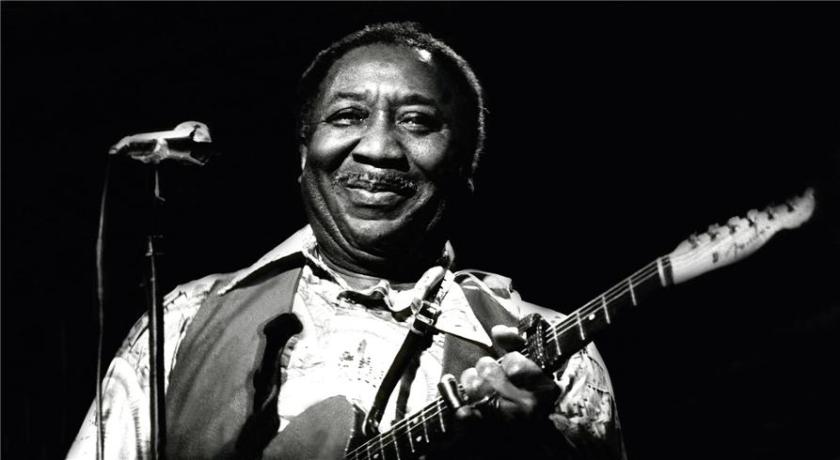
Muddy Waters and Biblical Interpretation

Okay, stick with me here. 

I became a blues fan in the 1980s during the huge blues revival ushered in by Stevie Ray Vaughan, the Fabulous Thunderbirds, and Robert Cray. My dad became a blues fan during the huge blues revival of the 1960s ushered in by the Rolling Stones, the Yardbirds, the Animals, and others.  During each revival, something wonderful happened. The original blues artists who inspired the young guns also saw tremendous surges in their popularity. Eric Clapton, the Stones, Johnnty Winter, Jimmy Page, and Jimi Hendrix sent music fans to the shops and the clubs after the music of Muddy Waters, Howlin’ Wolf, Robert Johnson, B.B. King, John Lee Hooker, and Jimmy Reed. Freddie King started having hit records. Bo Diddley was a huge concert draw. Later on in the 1980s, Stevie Ray Vaughan fans rediscovered Buddy Guy, Albert Collins, Lonnie Brooks, Johnny Copeland, and KoKo Taylor.

Muddy Waters, in particular, was fond of calling his disciples his sons.  He claimed Eric Clapton and Johnny Winter as his sons.  This was obviously not a biological claim, but rather a recognition that these “sons” of his were the bearers of his tradition and legacy. Clapton and Winter revered Waters and his work, and kept his music alive. Muddy knew that his music was safe in the hands of his “sons.” Muddy knew his music, his tradition, his legacy would live well beyond his body because they had been passed to his sons, who would then pass it to their own sons and daughters. 

I love the Bible. I love the passages that look to our eyes like genealogies. My theological mind can’t help but wonder sometimes if the genealogical lists in the Holy Scriptures are something beyond biological records. We tend to read them as standard genealogies because they look to our modernist minds like genealogies. But what if the claims put forth by these lists are not biological but rather theological? What if the lists in the opening chapters of Matthew and Luke are meant to be taken as theological genealogies rather than biological ones? What if Jesus is the “son of David” in a way similar to how Derek Trucks is the son of Duane Allman, who is the son of Elmore James, who is the son of Robert Johnson?  

Sometimes language works in ways that go beyond the literal. Metaphors don’t always let you know they’re metaphors. (If they did, they’d cease to be metaphors; they’d be similes.) To limit the function of language to the literal is to rob it of much of its power. If we interpret all language as literal, we’ve sucked the life out of poetry

I could be completely wrong here, and I’m sure there are many within my denomination and tribe who would deem it necessary to “correct” me.  But I’m not trying to explain away any sort of inconvenient Biblical truths here. In fact, I’m seeking to find deeper meaning in passages that can be approximately as interesting as long division or watching mulch decompose. I’m not trying to say that Jacob (Israel) is not literally the son Issac and the grandson of Abraham; I’m choosing to focus on how the imago dei passed from Abraham to Isaac to Jacob.  Because I believe that the passing of imago dei through generations is far more important than passing DNA. But that’s just me. 

Johnny Winters is Muddy’s “son.”  Eric Clapton is Muddy’s “son.”  

I graduated from Eden Theological Seminary.  That puts Walter Brueggemann, Reinhold Niebuhr, and Richard Niebuhr in my theological genealogy, as well as Damayanthi Niles, Deb Krause, Steve Patterson, Clint McCann, John Bracke, Peggy Way, Joretta Marshall, and a host of others.  I’m United Methodist, which puts John and Charles Wesley in my theological DNA along with their beautifully diverse children from John Cobb, Schubert Ogden, and Marjorie Suchocki to Thomas Oden, William Abraham, and others.  

I’m also a blues-rock guitarist, which makes me a son of Eric Clapton.  And Muddy Waters.

I’m a man.  

I spell, M!  

A, child.

N. 

October is Pastor Appreciation Month

For Pastor Appreciation Month, I thought I’d follow my friend and colleague’s lead and list some of the pastors who have helped shape my faith and my life.  

From my home church, First United Methodist of Carrier Mills, IL

  • Steve Palmer was the first pastor with whom I had a connection.  He had a passion for our UMYF, and was my pastor when I took my first steps into faith.  His wife Linda held my hand as I prayed at the altar at Beulah Youth Institute (church camp) when I first gave my life to Jesus. 
  • Tom Richards was our pastor when my brother and I were confirmed and baptized. 
  • Harold (Red) Andricks led our church through a period of transformation.  He taught us how important it is for the laity of the church to own its ministries.  In many ways, he taught us how to be a church.  He also helped lead my dad into a life of faith, and baptized my daughter Caitlyn. 
  • Victor Long led our church into and through a time of tremendous vitality. He also mentored me in the early stages of my ministry inquiry process.  He taught me Lectio Divina, the Liturgy of the Hours, and showed me how theology really matters in the life of the church.  He remains a friend, trusted colleage, and a personal mentor to me.  My admiration for Victor is tremendous. Victor also baptized my sons, Anthony and Carter. 
  • Deb Pollex entered the ministry process at approximately the same time as me.  Her meditative, contemplative, and artistic approach to church leadership, especially youth leadership, is inspiring to me.  Often when designing a worship experience I ask myself, “how might Deb do this?”
  • I also have to mention Joey Dunning and Stan Irvin, who have served CM FUMC since I left.  They have been my family’s pastors and have done tremendous work. 

From other scenes in the Rest of my life

  • Larry Gilbert has been my pastor, my District Superintendent, and my friend.  He taught me a lot about preaching, and helped me understand how deeply human pastors really are.  
  • David Eadie was never my pastor nor a formal mentor, but he was a colleague in a Covenant group during my Provisional Elder years.  His words of support and care during that time are precious to me.  No one has been more supportive of my ministry in our denomination.  He retired the year I was ordained.  During the passing of the lamp from the retirees to the new ordinands, he represented the retiring class and I received the lamp from him as a representative of the ordination class.  
  • Steve Patterson, Damayanthi Niles, John Bracke, Karen Tye, Peggy Way, Joretta Marshall, Diane Windler, Deb Krause, Martha Robertson, Michael Kinnamon, Jesse Williams, Clint McCann, and so many others who taught and guided me at Eden Theological Seminary.  In preparation for ministry, my faith was deconstructed, reconstructed, and built up in ways I could never have anticipated.  
  • Robb McCoy, Robyn Miller, Nelson Pierce, Margaret Redmond, Frank LeBlanc, Carole Barner, Stacy Tate, Kim Shirar, Hope Molozaiy, Jessica Taft, Josh Williams, Grant Armstrong, Brady Abel, Rocky Sheneman, Tony Clark, Joe and Jessica Rowley, Dietra Wise, Jessica Petersen and again… so many more than I can name who were my classmates and friends at Eden.  We made beautiful theology and beautiful music together, and walking through that re-formation process together was pure joy. 
  • Nicole Wiedman-Cox, Robb McCoy (again), Jeremiah Thompson, Josh Williams (again):  AKA Troublemaker’s Corner.  We went through the Residence in Ministry program together and caused all kinds of trouble there.  Now we sit together at Annual Conference and cause trouble.  I love these people more than I can say, and I love having them as friends and colleagues.  
  • Cindy Jones was my DS through thick and thin.  Ordination, divorce, remarriage, closing a church… Cindy has been there with me, sometimes holding my hand and other times holding me up.  She has built and affirmed my leadership skills in ways I can’t even express.  My current DS, Randy Reese, is also wonderful. 
  • Joe Scheets, Annelle Ruemmler, Dan Perry, and Tim Pate are my bandmates in the Rivers of Life Clergy Band, but our relationship is far more than musical.  They are my friends and my favorite Covenant group ever.  

And I’ve only scratched the surface. 

I thank God for so many I have named here, and so many left unnamed.  

How have your pastors affected your life?  How do you plan to show appreciation to them?  


Pastoring and Blogging – Lives Lived in Public.

“Vulnerability sounds like truth and feels like courage. Truth and courage aren’t always comfortable, but they’re never weakness.”  – Brené Brown, Daring Greatly: How the Courage to Be Vulnerable Transforms the Way We Live, Love, Parent, and Lead.

So, pastor, how transparent dare ye be? 

When I restarted blogging a couple of weeks ago I had hoped to post something every day.  I’m still moving in that direction, but I’ve come across a mental/emotional roadblock. 

How public should my life be?  

I have several partially-written posts in my “Drafts” folder.  I abandoned them because I found myself revealing a little more than I really wanted to share.  When writing confessionally and transparently, it’s easy to get carried away.  To get a little too transparent.  A little too vulnerable.  

There’s a part of me that wants to blog about my experience as a divorced pastor.  When my marriage fell apart, so did my previous (and reasonably successful) blog.  But I can’t bring myself to do it.  My kids read this.  Their mother could read it.  And I don’t want to present myself as someone who is hung up in that period of my life, because I’m not.  But it is an experience that has helped shape the man I have become.  And I don’t want to be unfair in any way to my kids or their mother.  So I’m not going there. 

In another draft I got a little too political.  I have my political convictions, as do most adults, but I hate the way people act in political discourse these days, especially with the false veil of anonymity provided by the internet.  So I like to avoid that stress. 

Yet I think about a man whom I admire.  He’s a preacher, a pastor, and a colleague.  At one time he was my pastor.  He has a very confessional preaching style.  He openly admits his struggles with scripture.  He tells stories of personal failure from the pulpit.  I had a conversation with him about how much I admired his confessional manner, and he told me it’s intentional.  “I always go back to that passage from Isaiah, ‘by his wounds we are healed,'” (Isaiah 53:5)  “Perhaps in sharing our wounds, we are all healed.”

“Isn’t it kind of dangerous to be so vulnerable?” I asked.

“Very,” he replied.  “There are people who will use your vulnerability to their advantage.  But the relationships that get strengthened outweigh the risks.” 

Vulnerability allows us to see one another in a state of realness, for lack of a better word.  We are more authentically present, more massively there.  We’re no longer dressed in our Sunday best, plastic smile pasted on our faces, pretending to have it all together.  We’re just together, attempting to live out our salvation in fear and trembling.  Vulnerability opens passageways to transformation.  It can build and strengthen relationships.  It can allow us to deal with anxieties, sin, doubt, hurt, and brokenness – and it refuses to let us deal with them alone.  It can allow us to share in our burdens.  

So, as a pastor and a blogger, I live in a kind of weird tension.  On the one hand, vulnerability can do tremendous good: it canmake me human, relatable, and open.  On the other hand, it can do harm: I can disclose things that would be harmful to my personal relationships and my own relatively peaceful life.  

I don’t have an easy answer.  How transparent should I be?  How transparent dare I be?  I don’t really know.  I guess I’ll just have to play it by ear. 

Monday Musings: Newsletters No One Reads

Our church, like many churches, has a monthly newsletter.  There’s a calendar of events that is widely used by the congregation, as well as articles from the United Methodist Women, fun pages for the kids, blurbs about upcoming happenings in the life of the church, and a cover page article from yours truly. 

The written word is powerful.  From the advent of written language to the Gutenberg press to Google and beyond, the written word has been a tremendous force in preserving and passing information and ideas through generations.  Our ability to transmit and broadcast the written word has never been greater.  We can blog and make our thoughts available to anyone with internet access.  We can write and self-publish books.  Our churches, they still like newsletters. 

How many newsletters do you receive in a month?  What purpose does the newsletter serve?  Do you actually read it? 

Be honest.  How many of those newsletters do you actually read, cover-to-cover? 

Probably about as many as I do.  I sometimes skim the Lion’s Club newsletter.  I browse the Interpreter and the Conference newsletter (The Current) to see if there’s anything in there I really want to read.  I get newsletters from a couple of churches where I used to be a member, probably because they need to send out so many copies in order to get the bulk postage rate. I undoubtedly receive several newsletters I can’t even remember right now. 

Even though I don’t read all of them, the newsletter does give me a sense of belonging.  Just receiving it serves as a reminder that I belong to the group – I’m part of the family.  It’s as if sending me a newsletter is the organization’s way of saying, “we remembered you because you’re important to us.” 

And yet, there’s a cranky, skeptical part of me that has difficulty with spending so much time, effort, and energy on a publication that no one really reads.  It’s tempting to use the same cover article over and over.  I’ve been known to say to myself, “maybe I’ll write three articles and put them on a three month rotation for a whole year, and see if anyone notices.”  If I were to print the “Summer’s here, school’s out, but the church is just starting to heat up!” article in November’s newsletter, would anyone say anything?  

In September, I buried this item in our newsletter.  It wasn’t my best work, but it was just an experiment to see who would respond:

Volunteers are needed to help us clean out the Media Room.  We are installing a complicated new security system that will aid in the early detection of alien invasions, and the space now known as the Media Room will be where we store the servers, monitors, and other equipment.  The confirmation room will be used to store non-conventional weapons.  These items are available at the Home Center.  Agatha [name redacted] has the list of items we need to stockpile, but you must ask her secretly.  Furthermore, if you actually read this bit of nonsense, please let us know in the office but don’t tell anyone else about it—let them find it for themselves.


Nothing.  One lady, the one named in the article, noticed and she howled with laughter.  So for October I added this little gem: 

Donations Needed
It has come to our attention that the baby grand piano in the sanctuary has aged a bit and has become an adolescent grand piano. Chances are good that upon reaching adolescence the piano may begin to act in rebellious ways such as sneaking out at night, skipping church, refusing to do its chores, and backtalking adults. It may even begin playing songs the musicians don’t like. Its music is likely to be loud and obnoxious.
The didjeridoo is a traditional Australian musical instrument usually made from a large eucalyptus branch that has been hollowed out by termites. A mouthpiece made from beeswax is attached to one end. Agatha [name redacted] at the Home Center has a pattern for a didjeridoo made from PVC pipe and Gulf Wax. We are currently looking for volunteers to purchase the PVC and the wax, as well as artists to decorate the didjeridoos, and musicians willing to play them. We in the office believe that nine or ten worship services with exclusively didjeridoo music will teach the rebellious adolescent grand piano a lesson and whip it into shape.

 So far, I have received two notices that it has been read.  

But here’s the interesting thing:  I’ve decided that these humor articles are a fun exercise in creative writing.  What started as a social experiment to see if anyone is paying attention to the newsletter has become a fun personal challenge to write for the sheer joy of writing.  

Goofiness is my business, and business is booming! 


Wednesday Reflections: On 9/11

Chances are good that your Facebook wall is difficult to behold today.  Lots of “We Will Never Forget” graphics.  Lots of “where I was that day” reminiscences.  On the anniversary of 9/11/01 we are generally overwhelmed with images and stories that remind us of that day. 

What I’m reminded of is the deep wounds our nation developed.  Wounds that have not healed, and some that show no signs of healing at all. 

I am deeply disheartened at the anti-Muslim sentiment in our nation.  We were not attacked by Islam, we were attacked by terrorists.  Terrorists come in multiple religions, multiple skin tones, multiple nationalities and ideologies.  Terror organizations tend to use (abuse) the dominant religion of their region to manipulate people to work for their political ends.  As long as we remind ourselves “We will never forget,” let us not forget that on April 19, 1995 we were struck by white-skinned American terrorists who claimed Christianity as their religion.  We can no more blame Islam for 9/11 than we can Christianity for 4/19.  

Let us never forget that the church failed to truly grasp the significance of 9/11 in the following weeks and months.  Church attendance went up because people were looking for answers.  And we collectively failed to communicate this simple and essential truth: we don’t know why bad things happen but we do know love, and love is the answer.  And love isn’t some glitter-dust fairy tale of hippy-dippy idealism.  No, love is gritty and tough.  Love in action is self-sacrificial.  Love means getting your hands dirty as you pull someone else up.  Love means standing up for those whose voices are silenced, especially when it’s scary.  

The anniversary of 9/11 should remind us that no one is guaranteed tomorrow.  Remember to show your affection deeply to the ones you love the most.  Hug your children.  Kiss your spouse.  Never pass up an opportunity to show them you love them.  Like anything else that is precious, life is fragile.  

Finally, let us never forget that our world is profoundly broken.  Our government failed to prevent the terrorist attack, and in many ways it also failed to respond appropriately.  (Remember, we were told to go shopping to stimulate the economy. Really?  Our first response to terrorism was consumerism?)  Humans, for some reason, love responding with violence and shows of force.  We seek solutions that will bring peace, yet our efforts usually end up perpetuating conflict and war.  We need to seek and find a better way. 

We will never forget how desperate we are for hope in a broken world.  We will never forget that genuine self-sacrificial love is in too-short supply.  We will never forget that life is too precious and fragile to waste our time with conflict.  We will never forget God’s vision of this world transformed, and our hope that one day we will turn our swords into plowshares and study war no more.